
Hear the stories you’ve been walking past.
TellTours tells you the story of every place around you, out loud, as you reach it. Walk, cycle or drive.




Story of the Colosseum: The Colosseum is the largest ancient amphitheatre ever built. Work began under the emperor Vespasian in 72, and his son Titus finished it in AD 80. It could hold an estimated 50,000 to 80,000 people, who came for gladiator contests, animal hunts and, for a short time, even mock sea battles.
Pick a place
How it works.
Two ways to go. Just walk, and it talks about whatever you pass. Or plan a tour first, and it tells each stop as you reach it.
-
As you walk, the place nearest you is already on the card, with how far away it is.
-
Press play, or switch on Auto-play and it speaks up by itself at each place you reach.
-
Every story comes with its full text and a photo. Tap Tell me more when you want the rest.
-
One story ends and you keep going. With Auto-play on, the next place starts by itself as you reach it.
A walk through Rome.
Six places in 2.9 kilometres, from Piazza Navona to the Colosseum. Each one starts telling as you reach it.


- Piazza Navona: Its long oval is the shape of the Stadium of Domitian, the first-century stadium it was built on.
- Pantheon: Almost two thousand years after it was built, its dome is still the largest unreinforced concrete dome in the world.
- Trevi Fountain: Finished in 1762, it is the largest Baroque fountain in the world. About 3,000 euros are thrown in every day, and the money goes to charity.
- Vittoriano: Built between 1885 and 1935 to honour Victor Emmanuel II, the first king of a unified Italy. It also holds the shrine of Italy’s Unknown Soldier.
- Roman Forum: For centuries this was the centre of daily life in Rome: triumphal processions, elections, public speeches and criminal trials all happened here.
- Colosseum: The largest ancient amphitheatre ever built, and still the largest standing amphitheatre in the world.
Walking route and map data © OpenStreetMap contributors. Each line is from the place’s Wikipedia article.

Start with your own street.
You don’t need a plane ticket. The buildings you pass every day have stories too.
Toronto’s Gooderham Building is ten years older than New York’s Flatiron, and the building before it was called the Coffin Block. TellTours finds stories like that wherever you are, from your own neighbourhood to the next town over.
It keeps your pace.
It works out from your speed whether you’re walking, cycling or driving, and paces its stories to match. There’s nothing to set.



On foot it looks around every 100 m or so. Stop to look, and it carries on with more about the place in front of you.
On a bike it looks around every 250 m or so. It never cuts a story short to start the next one.
In a car it looks around every 700 m or so. Stories start before you reach a place, and landmarks too far off the road are skipped.
CarPlay and Android Auto are on the way, for road trips with the guide on the car’s own screen.
In every mode it keeps talking with your phone locked in your pocket.
Written and spoken on your phone.
By default, TellTours writes each story on your phone and reads it in a voice that runs there too. Our servers send the facts; your phone does the telling.
From the sources
Facts
Wikipedia, Wikidata, OpenStreetMap, OpenTripMap and heritage registers, gathered for the places around you.
On your phone
Story
Written on the device with Apple Intelligence on iPhone or Gemini Nano on Android. Phones without on-device AI read you the source text, or get the story from the cloud.
Voice
A natural voice generated on the phone, after a one-time download. Prefer cloud voices? The HD ones are in Settings.
Free to run.
A story written and spoken on your phone costs nothing to tell, so there’s no meter running while you explore.
Steady in a dead zone.
Lose signal and the story you’re hearing keeps playing, along with the ones already lined up. The guide tells you it’s offline and picks up again when you’re back. Finding new places needs a connection.
Make it your guide.
Tell it what you love, from history to hidden gems, and how you like to hear it. Every story is shaped for you, and it learns from your thumbs up and down and from what you ask.
It also remembers what you’ve heard. Come back to a place, or tap Tell me more, and you hear something new, never the same story twice.
A warm guide telling standard-length stories with some names and dates, at a normal pace.

Colosseum
You’re here · Historical
You’re at the Colosseum. For centuries, crowds of tens of thousands came through its arches for a day at the games. Earthquakes and stone robbers have taken their share since, yet it is still the largest standing amphitheatre in the world.
Chosen because you like history and architecture
Plan it. Ask it. Share it.
-
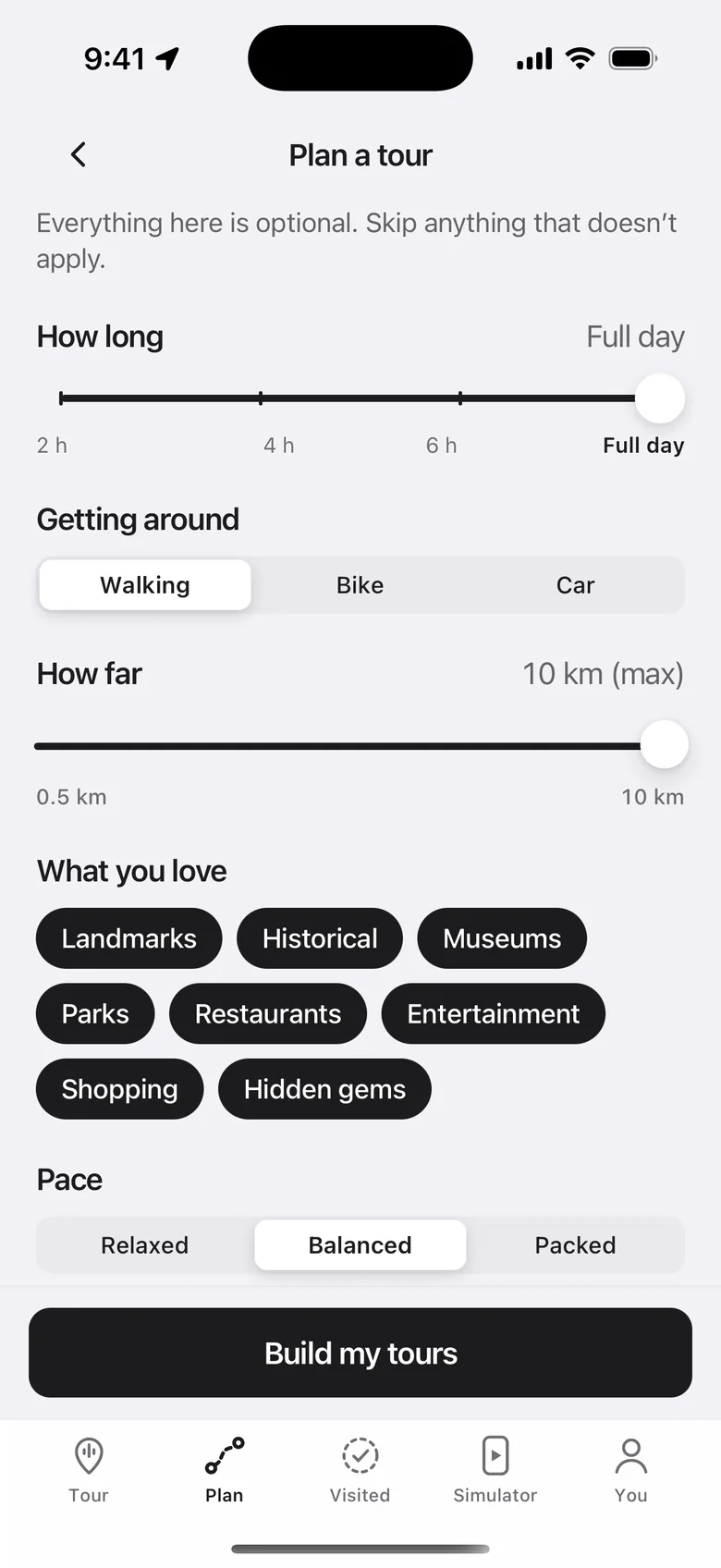
Say how long you have, how you’re getting around and what you love. It builds tours you can start on the spot or save for later.
-
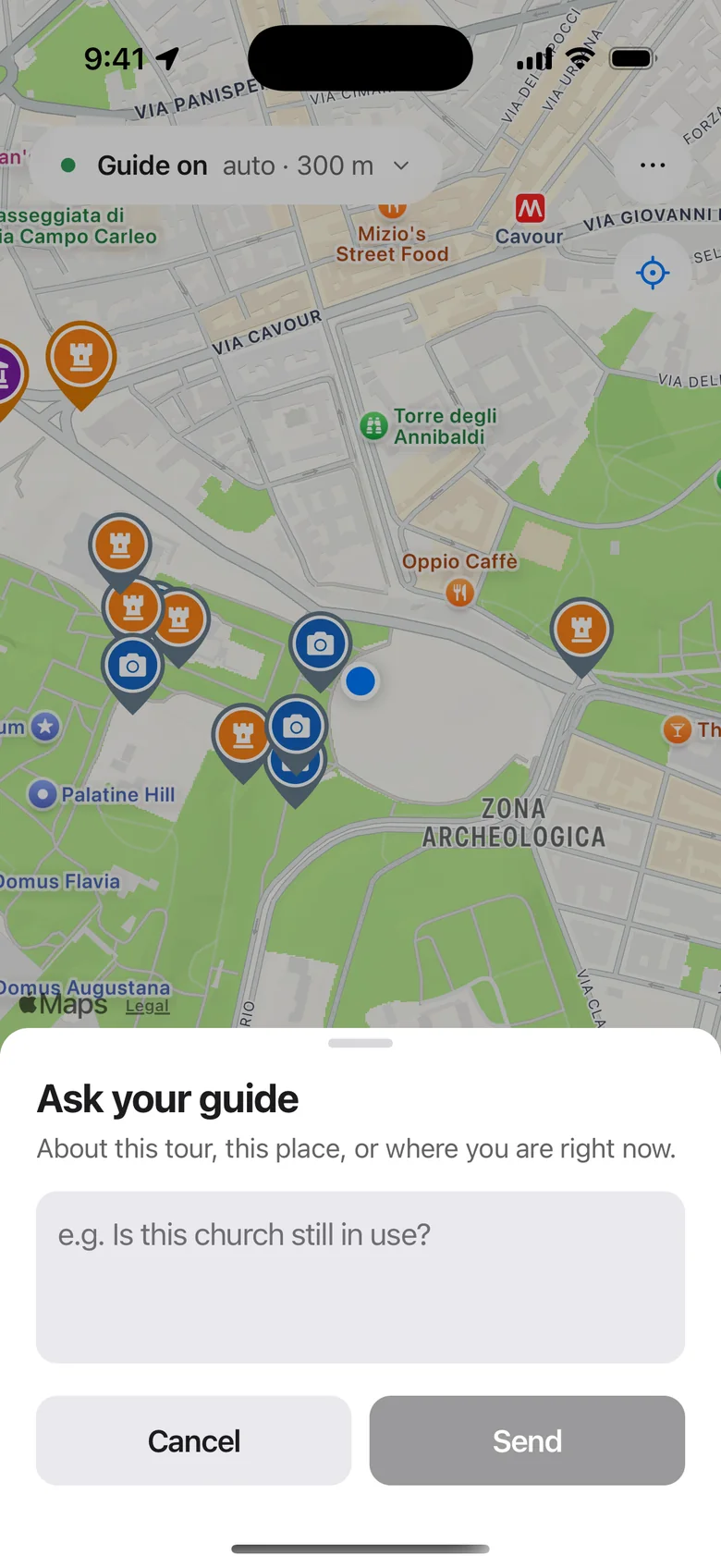
Curious about something? Ask about this tour, this place or where you are right now. Ask just for you, or for the whole group.
-
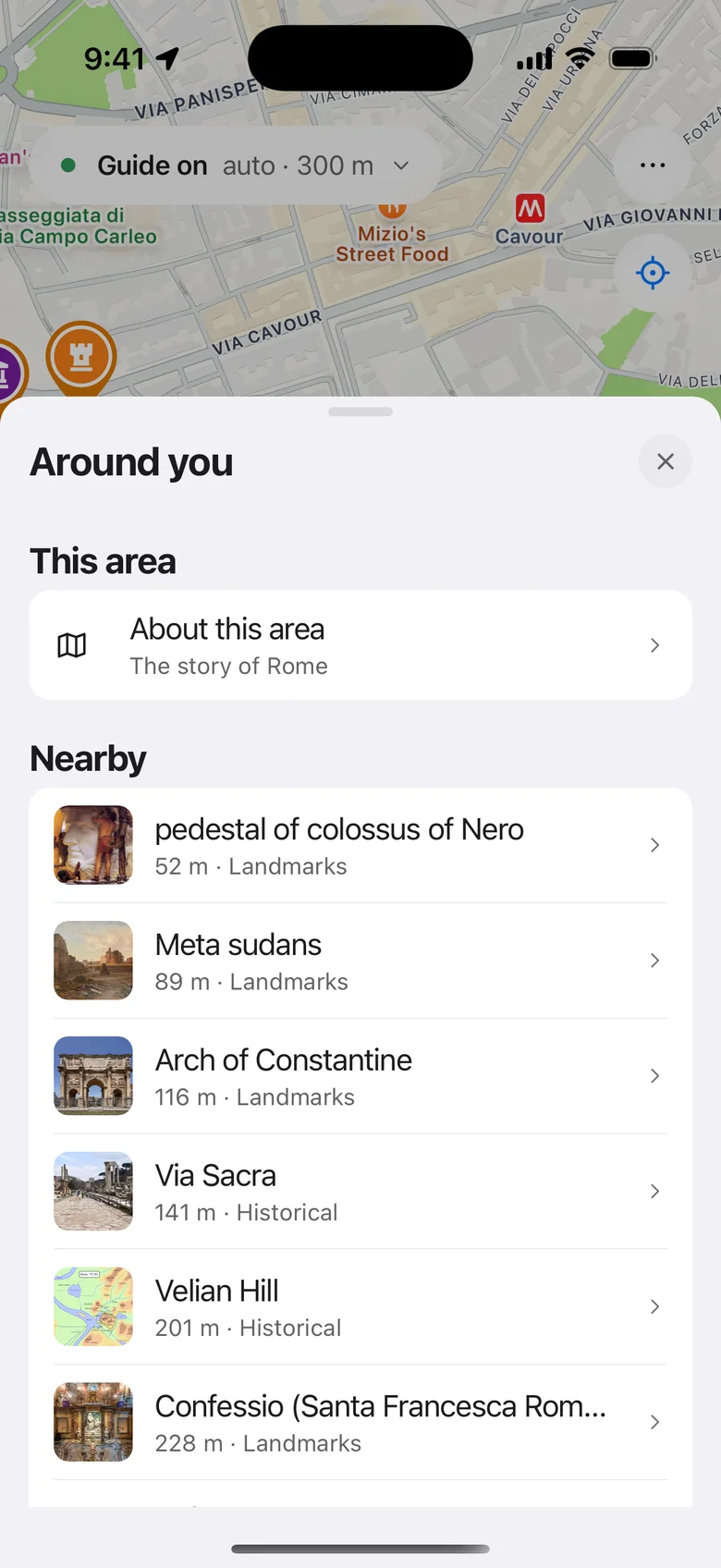
Everything nearby, closest first, each with a photo and its story ready to play. Plus the story of the area itself.
-
Start a group and share the link. Everyone hears the same stories, at the same places, on their own phone.

-
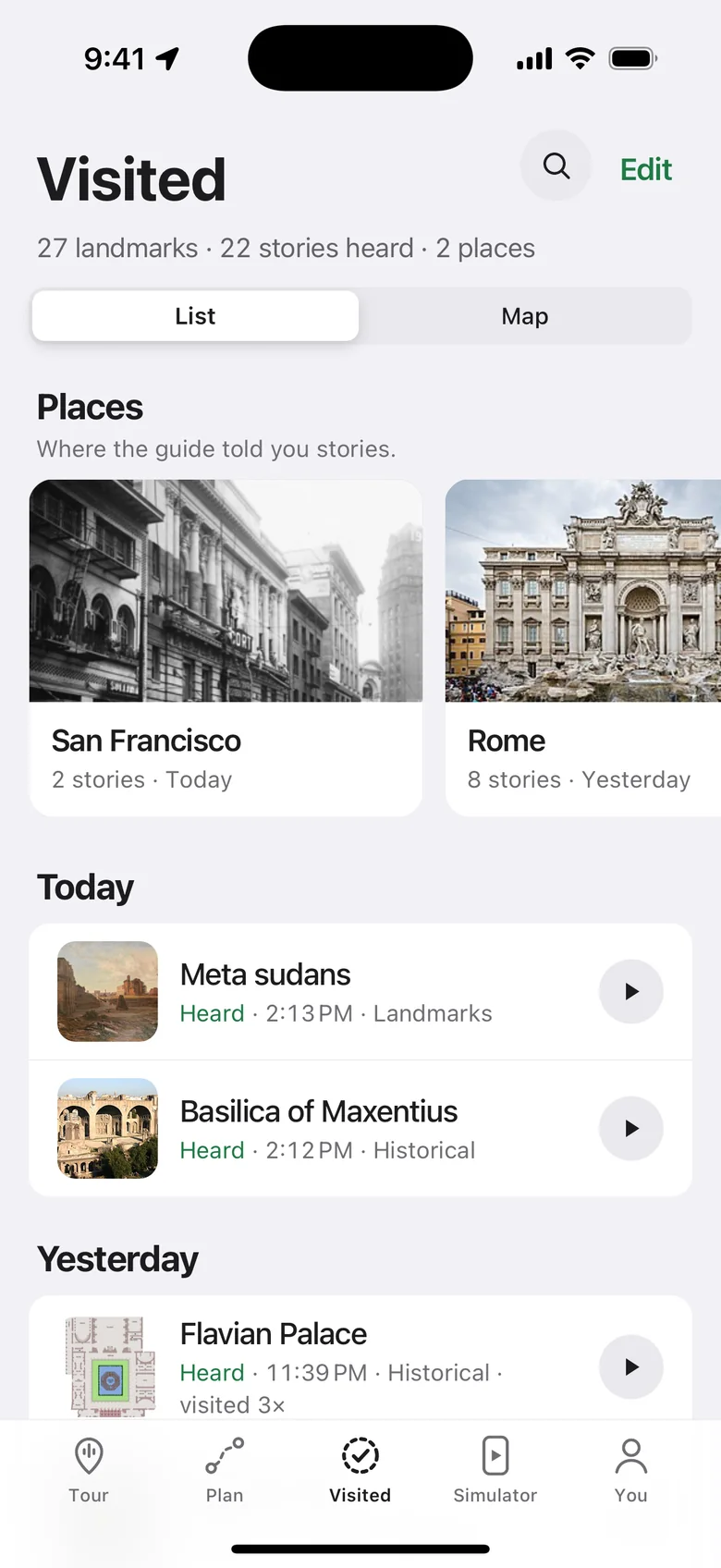
Every place you’ve passed, day by day: what you heard, what you only walked by, and a button to hear it again.
-
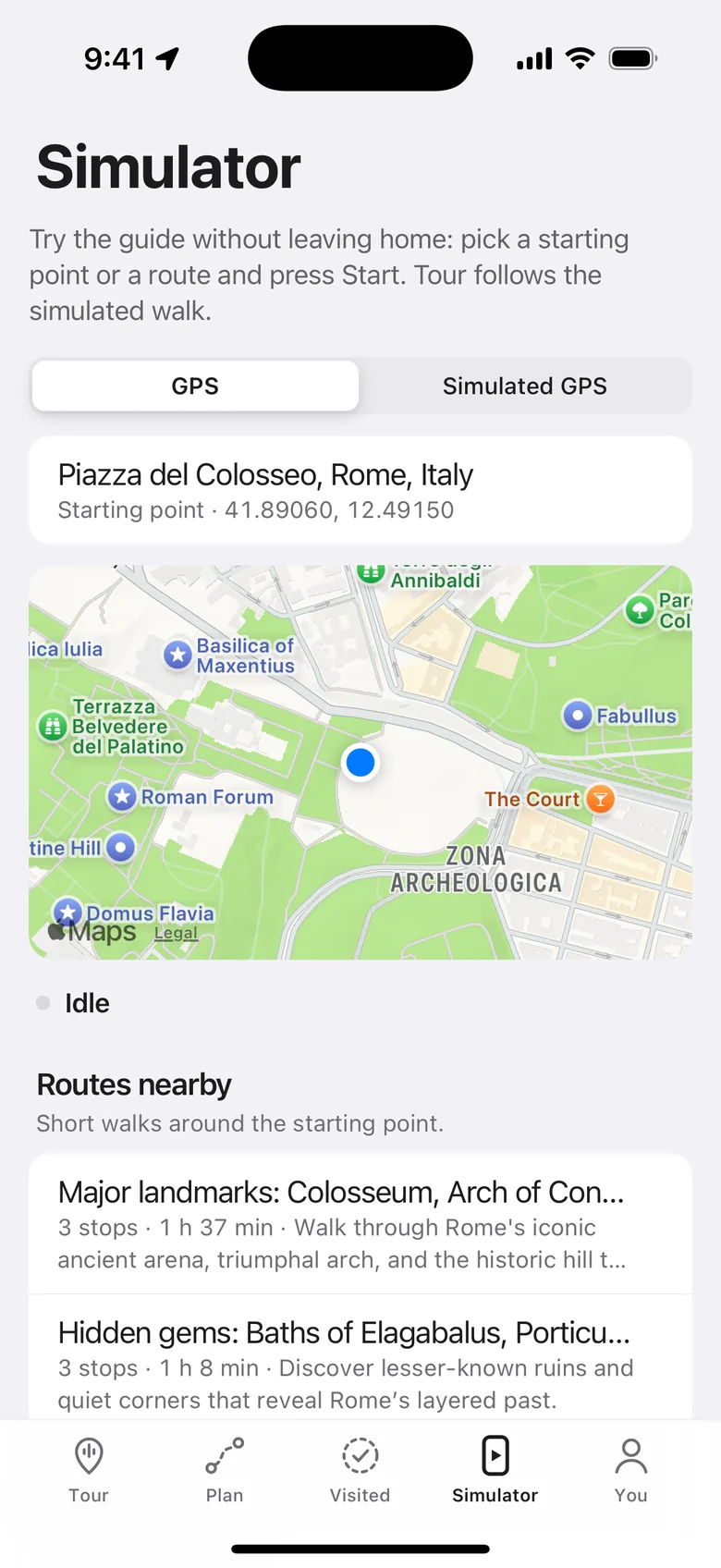
The Simulator walks you along a real route from your couch, so you can hear how it works before you go.
-
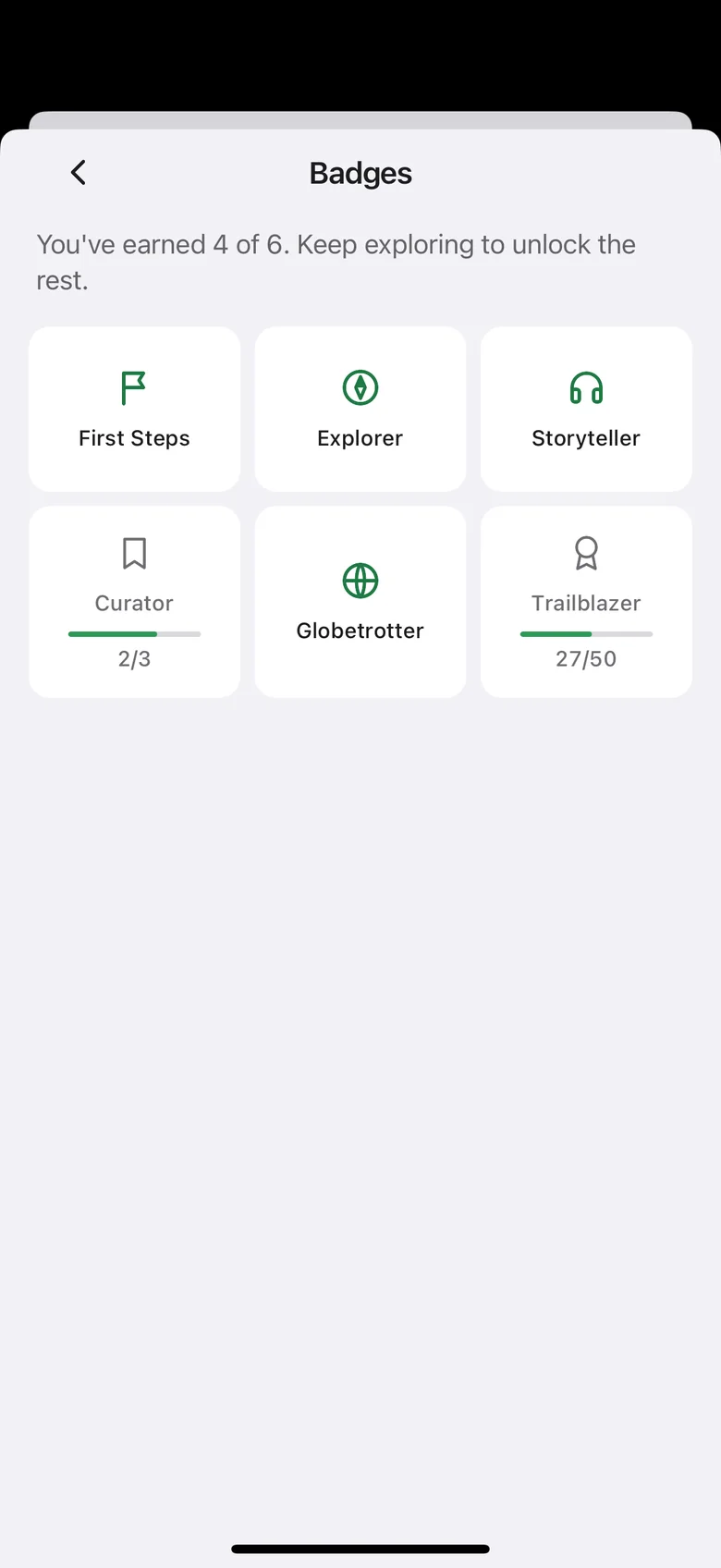
Six to earn as you go, from First Steps at your first place to Trailblazer at your fiftieth. Each shows how close you are.


Every sentence is checked.
Stories come from Wikipedia, Wikidata, OpenStreetMap, OpenTripMap and official heritage registers. Before the guide says a sentence, it’s checked against them. What they don’t back up is cut.
Gladiators fought in its arena, wild animals were hunted there, and for a short time it even staged battles at sea.
… it was used for gladiatorial contests and public spectacles including animal hunts, executions, re-enactments of famous battles, dramas based on Roman mythology, and briefly mock sea battles.
Stories in nine languages.
- English
- Italiano
- Français
- Español
- Português
- Deutsch
- Polski
- हिन्दी
- Русский
Questions.
Where does TellTours work?
Anywhere its sources cover: Wikipedia, Wikidata, OpenStreetMap, OpenTripMap and official heritage registers. Busy cities have the most to tell, but most towns have more than you’d expect.
Does it work offline?
Partly. With the on-device voice, the story you’re hearing and the ones already lined up keep playing without signal, and places you opened recently still play. Finding new places needs a connection, so the guide tells you when it’s offline and picks up again when you’re back. Downloadable cities are planned.
What languages does it speak?
Nine: English, Italian, French, Spanish, Portuguese, German, Polish, Hindi and Russian. Choose one in Settings and every story is told in it.
Will I hear the same story twice?
No. It remembers what you’ve heard for 30 days, across walks, and leaves it out, so a place you pass every day keeps giving you something new. To start over, use Hear everything fresh in Advanced.
Is it free?
Yes. Everything in the app today is free. Stories made on your phone cost nothing to tell, and a Pro plan with extras like offline cities is planned for later.
Do I need an account?
Yes. A free account keeps your Visited places, saved tours and settings in sync across your devices.
How much battery does it use?
Location tracking runs in a low-power mode between stories, and narration plays with the screen off. Voices made on your phone use more battery than cloud voices; you can switch in Advanced.
Does it work with CarPlay or Android Auto?
They’re on the way. Today it plays through your car’s speakers like any other audio app, adjusts to driving speed, and on iPhone it pauses for navigation directions.

Your next walk has a story in it.
TellTours is in beta on iPhone and Android. Leave your email and we’ll send you an invite.
Free to use. CarPlay, Android Auto and offline cities are on the way.